Hull's New Lib Dem Lord makes Maiden Speech
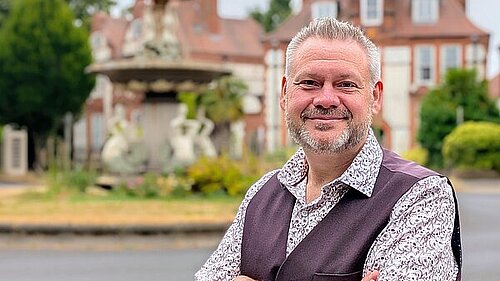
New Liberal Democrat peer Dave McCobb - formally Baron McCobb, of Kingston upon Hull in the East Riding of Yorkshire was introduced to the House of Lords recently and today made his first speech. By tradition this is not a party political comment.
He said:
My Lords, it is a privilege to address this House for the first time. I have been touched by the welcome that I have received from noble Lords on all sides of the House. I am particularly grateful to my noble friends who introduced me: my noble friend Lady Pinnock, of Cleckheaton—a fellow citizen of Yorkshire, whose decades of local government experience we will hear of later in this debate—and my noble friend Lady Leaman, of Chipping Sodbury. She has been a friend and comrade through at least four general elections and is one of Britain’s sharpest political minds.
I am grateful too to Black Rod’s team, the doorkeepers, the clerks and the attendants. However, I must warn them that despite over 24 years as a city councillor in Hull, I never quite learned to tell one side of the ground floor of Hull’s Guildhall from the other, so I ask for their patience if they occasionally find me lost in the even more labyrinthine layout of this place.
I give thanks to the Liberal Democrat Whips’ Office, whose support and advice I have relied on since coming here and in my working life. To declare one interest, I remain the Liberal Democrats’ campaigns and elections director and, to declare another, I recently became a trustee of the Kingston upon Hull William Wilberforce Lecture Trust, a small charity that seeks to keep alive the legacy of one of my home city’s most famous representatives.
I particularly welcome today’s debate, tabled by my noble friend Lord Shipley—partly because, like me, he is a citizen of a proud northern port city, but mostly because it is on the power of local government and of my home city and its East Yorkshire surroundings that I wish to speak today. I ask for forgiveness in advance from noble Lords if these are themes to which I return with predictable frequency. My family finds itself in East Yorkshire because nearly 60 years ago, my parents came to Hull University as students, where my father became the head of the German department. As I was growing up, he served on the councils for the borough of Beverley and the East Riding. I feel today a particular sense of sadness that he missed my arrival here by just six months even though, as a good Liberal, he would probably have strongly disapproved of the lack of any election involved in getting me here.
I was born in Beverley and grew up nearby in the East Riding of Yorkshire. It was near Beverley that my wife Elspeth and I got married, but for the last 26 years I have lived in Hull, where our son was born. Like many others who live in this part of the world, my family’s lives run backwards and forwards across the border between Hull and the East Riding. The Yorkshire coast, from Filey to Spurn Point and the Holderness plains, shares a distinctive beauty:
“Here is unfenced existence:
Facing the sun, untalkative, out of reach”,
as Philip Larkin described it.
Hull and East Yorkshire people have a warmth and wit all of their own, with a quirky and occasionally rebellious sense of independence. It is a corner of Britain with a rich and fascinating history. Hull Fair, Europe’s largest travelling funfair, is one of the oldest events of its kind, dating back to 1279 via a royal charter granted by King Edward I. As an aside, the 732nd Hull Fair is taking place this very week, so I would be delighted to offer any noble Lords with a few hours to spare this coming weekend the guided tour.
Speaking of Hull’s history, in 1642 Hull’s governor, Sir John Hotham, turned King Charles I away from the city’s gates, an act of defiance many historians count among the sparks for the civil war. William Wilberforce, to whom I alluded earlier, born in 1759 in Hull and elected as its Member of Parliament in 1780, spent 20 years pursuing the abolition of the slave trade. At the peak of Britain’s maritime power, Hull was its third port. Its shipping line was, for a time, the largest privately owned one in the world and its distant-water trawler fleet remained among the biggest on earth until the 1970s.
Hull has also had its fair share of challenges—some of the heaviest bombing of any British city in the Second World War, with the majority of homes damaged and thousands destroyed. The fishing industry that sustained it for a century collapsed in the 1970s, with a fraction of the national attention and funding that followed similar economic challenges in other parts of the country.
For a city so geographically isolated, connectivity is everything, and here there is much work to be done. Our motorway, the M62, simply ends 15 or so miles short of Hull. Our airport is in Lincolnshire and has no rail link and no bus on a Sunday. Unlike other comparable cities of its size, Hull has no tram or metro system. Noble Lords may be surprised to learn that it is faster to travel by train from London to Paris—twice the distance—than from Hull to Liverpool via so many great cities of the north.
On this evidence, Hull city region is a strong contender for being one of the worst-connected places of its size in Britain. The devolution deal confirmed in September 2024 committed to integrating Hull into the Northern Powerhouse Rail network; I am determined to see that delivered, because Hull has shown what it can do when given the chance.
In 2017, Hull was the UK City of Culture. Over 5 million visits to Hull and east Yorkshire helped generate a new sense of pride and belonging in the area. As a local councillor, I wholeheartedly backed the sadly unsuccessful first bid for City of Culture status and the subsequent, second, successful one. This helped put this part of Britain on the map for the right reasons. A year ago, National Geographic ranked Hull as one of the top 20 global destinations to visit in its prestigious “best of the world” list. This transformation shows the difference that strong local government leadership with proper backing from national government can make.
For 24 years, I represented the Beverley Road and Newland Avenue areas on Hull City Council, helping constituents on a daily basis. I bring to this House a strong conviction that good local government can enrich people’s lives in ways that Westminster sometimes finds too easy to overlook.
I look forward to making the case for Hull and east Yorkshire in this House, as well as the positive case for the impact of that strong and effective local government with good national government backing to which I referred, and many more worthwhile causes besides. I hope to learn along the way from the wide range of wisdom and experience on offer from noble Lords on all sides of this Chamber, who continue to champion their chosen causes with passion and commitment.